 Nice newer forum
 on the scene growing daily with lots
of potential indeed. They have a lot to offer to members
from downloads to coding and much more go there sign
up and help them grow people!
 Watch free movies that are indexed from other sites here for free!
They have thousands of new and old releases available at your
disposal. You can also download some them for your own use.
This site works best with a faster connection. Try it out today!

Today, computer viruses, which are programs downloaded either as an email attachment or when someone visits a website, are responsible for most computer attacks. Hackers use them to gain control of a computer so that they can press-gang it into sending spam or downloading more malicious software, such as a keystroke logger, which can record credit card details and passwords typed in by the user.
Anti-virus (AV) software monitors a computer for signs of a virus, such as chunks of telltale code. To fight back, hackers write new viruses that use different code, or bury the code deeper in the operating system where the AV software isnt programmed to look. So AV firms and hackers are locked in an arms race, continually trying to outdo each other.
Soon hackers could up the ante even further. Samuel King and his colleagues at the University of Illinois at Urbana-Champaign have shown that they could also gain control of a computer by adding malicious circuits to its processor. Because these circuits interfere with the computer at a deeper level than a virus, they effectively operate below the radar of AV software.
To evaluate the risk from such hardware, Kings team designed their own malicious circuits. They used a processor called a field programmable gate array (FPGA), whose logic circuits can be rearranged, to create a replica of an existing open source processor called Leon3, which contains around 1.7 million circuits. They then added about 1000 malicious circuits not present in Leon3.
The team observed that the circuits allowed them to bypass security controls on Leon3 in a similar way to how a virus hands control of a computer to a hacker, but without requiring a flaw in a software application. When they hooked the FPGA up to another computer, they were able to steal passwords stored in its memory and install malicious software that would allow the operating system it was running to be remotely controlled. Once you have this mechanism in place, you can do whatever you want, says King, who presented the work at the Large-Scale Exploits and Emergent Threats conference in San Francisco last month.
Sneaking malicious hardware onto a chip is not as easy as installing a virus. The attacker must either have access to a chip during its design or manufacture, or be capable of manufacturing their own chips, which they would then have to sell to computer makers, or slip into computers during assembly. Its not something someone would carry out on weekends, says King.
Nonetheless, computer scientist Simha Sethumadhavan of Columbia University in New York says that chips and their design processes are becoming more complex, making it easier for a hacker to infiltrate. Recently, some Apple iPods and Seagate hard drives were found to have been sold with viruses pre-installed, demonstrating their vulnerability, says King.
Two new mobile phones coming pretty soon which are called the Nokia E71 and the Nokia E66, the question has to be “Are these two new mobile phones the one for you?
Both the Nokia E71 and Nokia E66 will boast 3.2 megapixel cameras, 128MB of memory, secondary video call cameras and looking at the phones some sort of cool styling. I have had no official information sent to me as of yet so let me tell you what I do know.
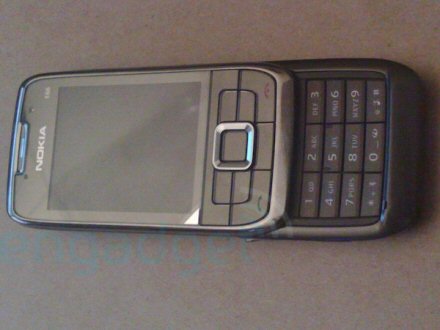
Nokia E66

Nokia E66
Below there are some photos just to tease you, the Nokia E66 is a cool slider handset which sports very large keys on the panel at the front and the main keyboard, the size of the display is somewhat distant and not known at this time but trust us we will find out sooner or later, we are judging it will be 16M TFT. The Nokia E66 is apparently being aimed at the enterprise market, as said above it will have a 3.2 megapixel camera and a second camera for those video calls over a 3G network, other features will include Wi-Fi connectivity and also HSDPA enabled plus a very loud speaker, microSD card of up to 8GB in capacity Bluetooth and the E66 will act as a navigation device with international maps and GPS.
Now moving onto the Nokia E71 which is a high end mobile phone which comes in monoblock form factor, you know like a BlackBerry, the E71 will feature a full QWERTY keyboard, QWERTY keyboard, very large “space” key and what we can see is that the D-Pad looks pretty much the same as the Nokia E61i. This phone will also have a 3.2 MP camera with auto focus, self-portrait mirror, flash and much more.

Nokia E71

Nokia E71
Obviously we have not got the full specs as of yet but we will keep you posted. Sign up to our free newsletter for updates.
Source - Decho Wireless and Engadget Mobile
Apple Inc. said Monday its online stores in the U.S. and U.K. are sold out of the iPhone, a sign supplies are being winnowed ahead of the launch of the device's next generation featuring faster Internet surfing speeds.
The Cupertino-based company confirmed that the iPhone is out of stock online, but added that brick-and-mortar stores run by Apple and iPhone carriers including AT&T Inc. might still have units available. Apple has been known for clearing out its inventory of a certain product ahead of a major upgrade.
Apple spokeswoman Natalie Kerris declined to comment on reasons for the shortage and on Apple's plans for an update to the device, which is widely expected to be unveiled in June at Apple's Worldwide Developers Conference in San Francisco.
The paucity of iPhones for sale in some markets comes as Apple is hustling to meet its goal of selling 10 million of the hybrid iPod-cell phone-Internet surfing gadgets by the end of 2008. So far, Apple has sold 5.4 million iPhones, according to the latest data as of the end of March.
One way Apple's expanding the iPhone's reach is by inking deals with wireless carriers around the world, even breaking with its pattern of requiring exclusivity to sell in a certain country.
On Monday, four mobile providers in the Asia-Pacific region announced partnerships with Apple to bring the iPhone to their regions later this year.
SingTel will sell the gadget in Singapore, Bharti Airtel Ltd. in India, Globe Telecom Inc. in the Philippines and Optus in Australia, the companies said in a brief joint statement, without giving details.
SingTel owns Optus and holds a 30.5 percent stake in Bharti and 44.5 percent in Globe.
SingTel has about 2.3 million mobile subscribers in Singapore and around 7 million in Australia, according to data as of Dec. 31, 2007. Bharti currently has about 64 million subscribers, while Globe reported a 21.3 million mobile subscriber base for the quarter ended March 31.
Last week, the top mobile phone operator in Latin America, America Movil SAB, also announced plans to deliver the iPhone to its region. America Movil has 159.2 million subscribers in 16 countries, including Argentina, Brazil, Chile, Colombia and Mexico.
In recent weeks Apple has also signed deals with Rogers Communications Inc. to sell the device in Canada; Milan-based Telecom Italia SpA to sell the iPhone in Italy; and Vodafone Group PLC, the world's biggest mobile company by sales, to sell it in a total of 10 countries, including Australia, India, Italy and Turkey.
Until the spate of the latest deals, Apple adhered to its policy of exclusivity with one carrier in each country.
The exclusive deals for the iPhone were with AT&T Inc. in the United States, O2 in Britain, T-Mobile in Germany and France Telecom's Orange wireless arm in France.
Industry observers say some people may be holding off on buying an iPhone until the much-rumored next-generation of the device is launched, and the phone is officially rolled out in more countries.
It takes some technical gymnastics, but it's still possible to get the phone in some markets where Apple doesn't have arrangements with wireless carriers.
Many of the phones sold so far have been bought legitimately in one country, modified to work on any cellular network, and resold in countries where Apple doesn't have agreements to sell the iPhone. The trend expands the iPhone's reach but deprives Apple of some of the subscriber fees that Apple splits with its carrier partners.
Another knock against the iPhone's current design is that it works over so-called 2.5G networks instead of the faster 3G, or third-generation, cell phone networks, which are popular outside the U.S. The difference in performance is similar to a dial-up Internet connection versus a high-speed broadband connection.
Apple's chief executive, Steve Jobs, has said Apple went with the slower cellular technology because the chips for 3G networks were too bulky and power-hungry when the iPhone was being designed, and because the iPhone automatically switches to faster Wi-Fi networks when they're available.
The next generation of iPhones is expected to work over 3G networks, which makes tasks like downloading videos easier.
Apple is also planning a software update for this summer that makes the iPhone work better with corporate e-mail, a necessary upgrade to help the iPhone compete with Research in Motion Ltd.'s BlackBerry and Palm Inc.'s Treo smart phones.
Girding for a fight with Apple in the business-oriented smart-phone space, Research In Motion on Monday unveiled the Bold, its first BlackBerry model to work over 3G, helping its shares climb to an all-time high of $143.08. The stock closed Monday up $9.20, or 6.9 percent, at $141.97.
Apple shares closed up $4.71, or 2.6 percent, at $188.16
 Samsung has Unveiled a New Digital Camera NV24HD. Samsung NV24HD Camera Comes with 10 Mega-pixel featuring the 720p video, 24-mm ultra wide angle lens, touch-sensitive buttons and 2.5″ AMOLED display.
 Goldstriker once again Unveiled the World’s 1st 24 carat Gold and Diamond edition Cellphone Nokia 8800 arte. At back side of the phone houses five bright white diamonds & the back cover etched with the diamond edition logo. Nokia 8800 arte priced at £1,195.